
A fixed core and four moving collars
The reactor study explores mechanical compression while keeping the core itself unchanged.
Locally rebuilt and validated at a154a3c; runtime source is unpublished and this checkpoint is separate from the closer-console prototype.
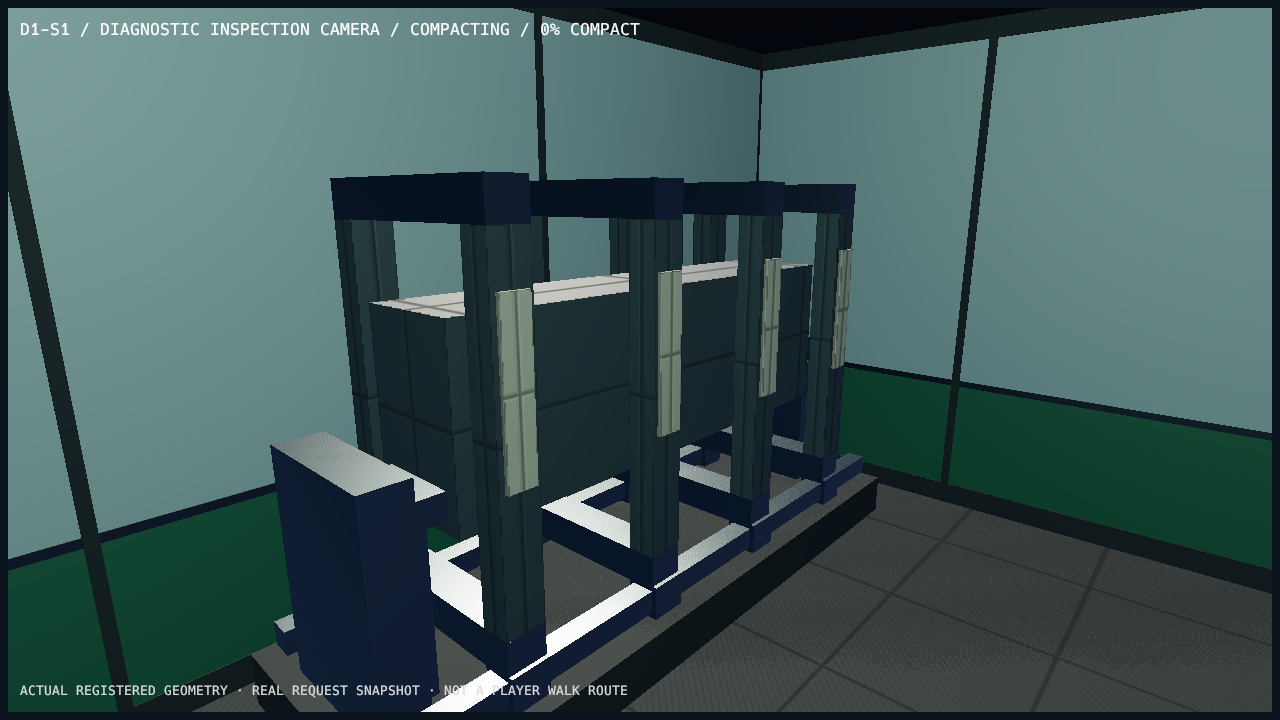
Play GIF Pause GIF · show still Capture details · motion paused Diagnostic collar compression
Actual captured frames with edited playback timing and endpoint holds. Edited playback is not a frame-rate benchmark. Reduced-motion settings or “Pause animations” show a still. Open original GIF. Open still.
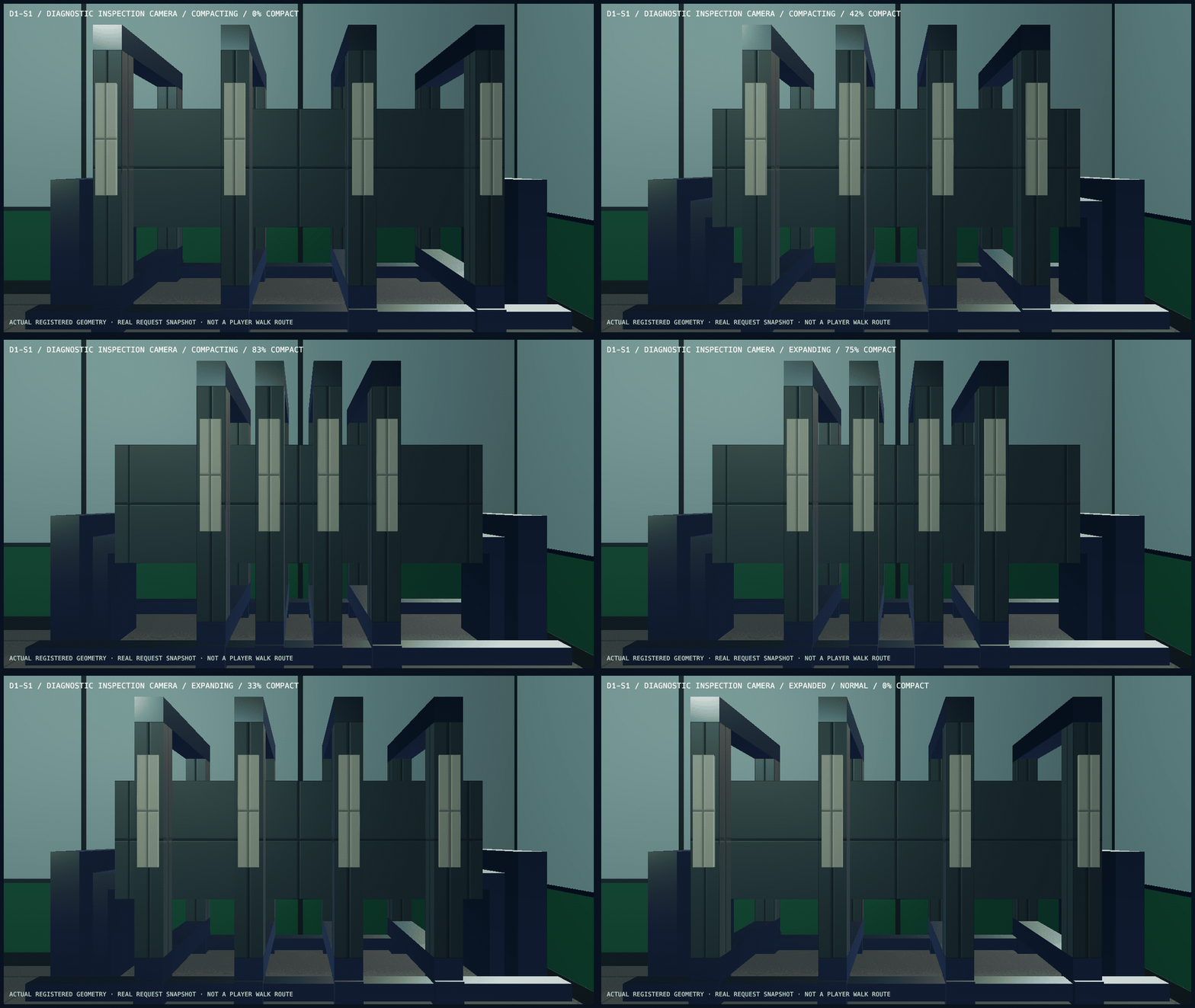
Keep the machinery understandable
Pioneer's reactor configuration study follows a simple physical rule: the core keeps its envelope. Four rigid, segmented collars move along rails between expanded and compact arrangements. The change comes from the position of those parts, rather than scaling the whole reactor down. That gives the motion something concrete to communicate: which pieces moved, where they went and what stayed in place.
The local prototype pairs that mechanism with a dedicated cockpit configuration display. The expanded room view and compact cockpit view show two ways of inspecting the same study. The room image comes from a diagnostic camera, so it should not be read as evidence that a player can already walk through that route.
Separate configuration from simulation
Moving geometry is one part of building a working ship system. The collar motion establishes a mechanical arrangement; it does not establish a thermodynamic reactor model. Motor energy, heat and a complete whole-ship power network need their own state and behavior. A convincing transition cannot supply those quantities on its own.
That distinction is useful beyond this room. A cockpit control should describe the condition of the equipment behind it. If a future mechanism is blocked, unpowered or still moving, the overview needs to say so. This study makes the configuration legible while leaving those broader engineering questions open. It gives the next layer a specific mechanism to connect, instead of treating an animation as the whole system.
Preserve the boundary of the proof
The captures here belong to the locally rebuilt and revalidated four-collar checkpoint. Its footage is separate from the closer side-console and drone-metrics prototype. Keeping those checkpoints distinct makes it possible to follow the development honestly without presenting independently tested pieces as an already integrated ship.
Warp preparation and closure interlocks remain part of the wider integration work, alongside real power and heat accounting. The motion sequence uses actual engine samples, with edited timing and endpoint holds for readability. It is evidence of the captured mechanism moving between configurations, not a benchmark of interactive performance. The useful progress here is a clear, inspectable physical rule that subsequent ship behavior can build on.