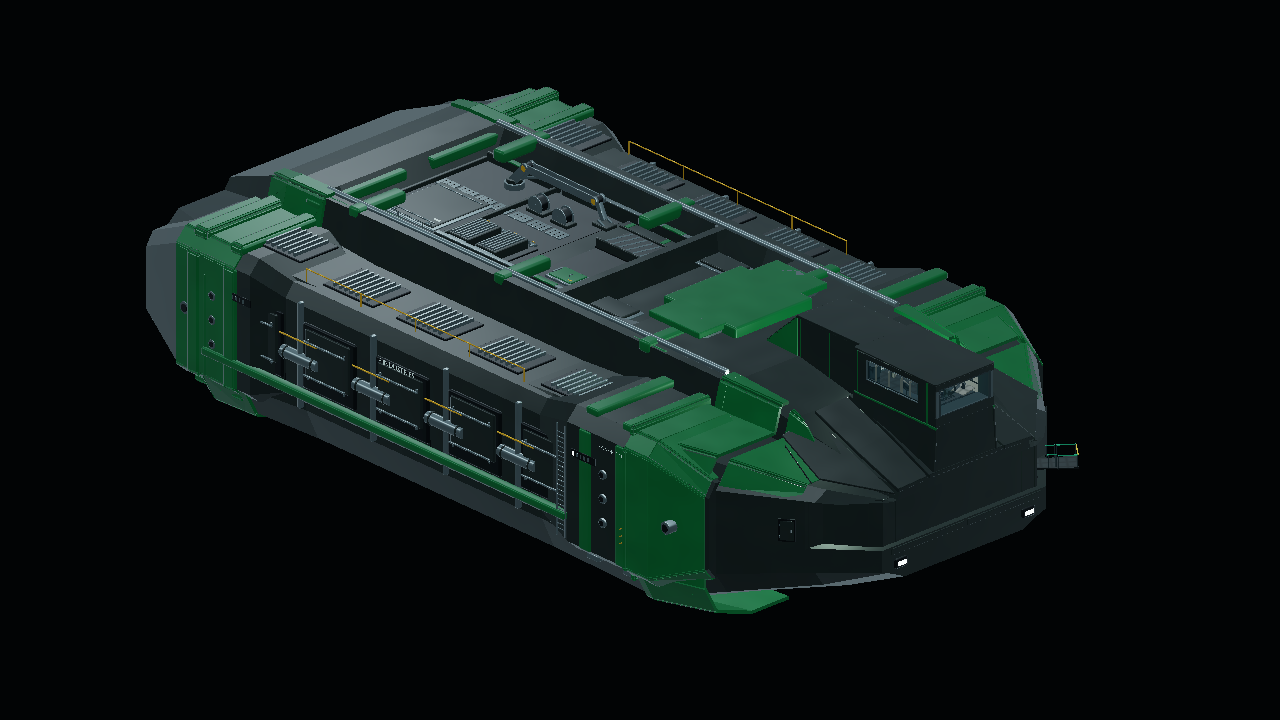
Raising the bridge, keeping the ship connected
An eight-metre bridge lift brings a new canopy, a real stair route and a matching hull refit while preserving the cockpit’s working systems.
Checkpoint c358f7b, tested on fresh development worlds. Runtime source is unpublished; this is not a release or deployment.
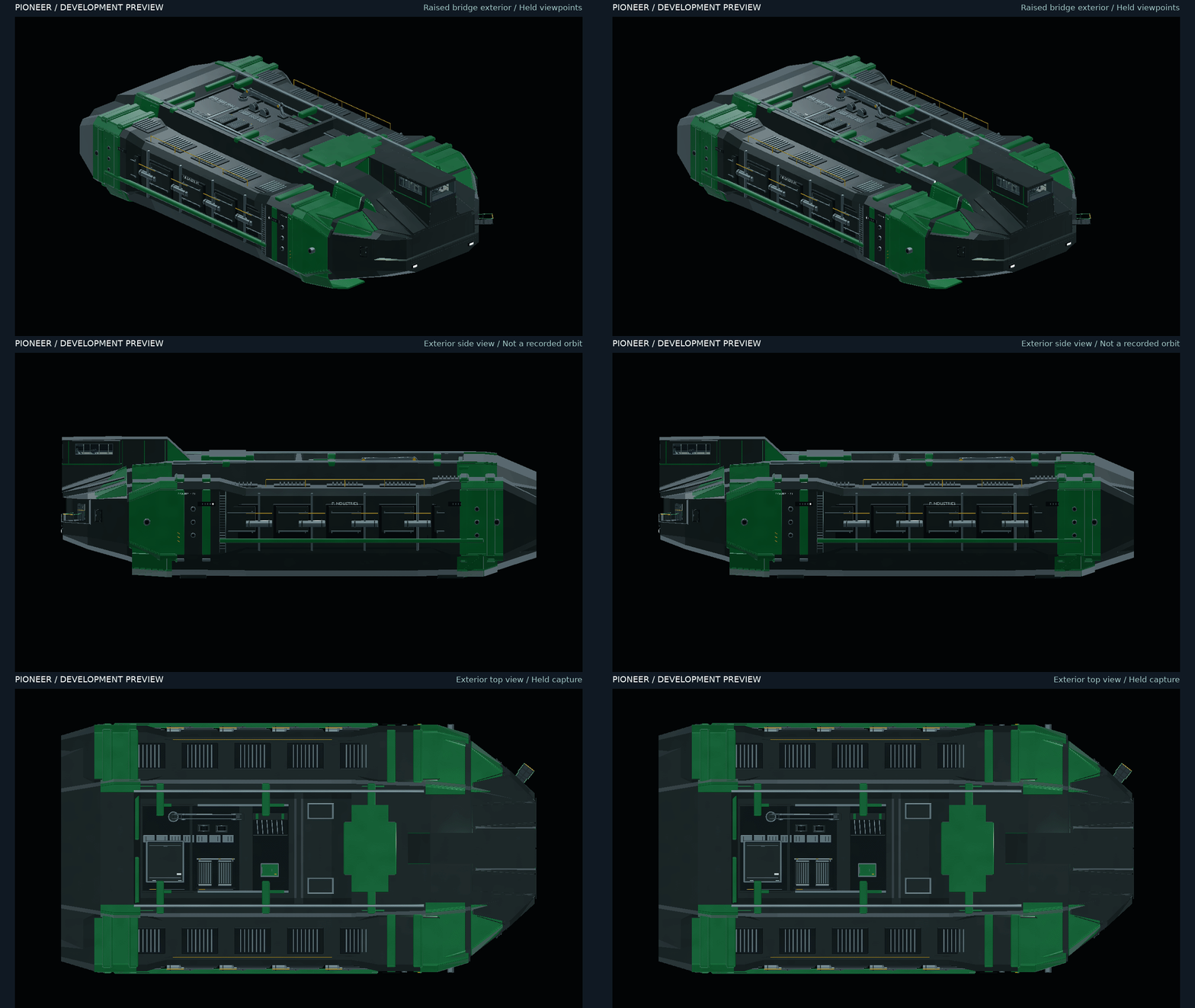
Play GIF Pause GIF · show still Capture details · motion paused Exterior viewpoint study
Separate actual engine viewpoints assembled for comparison, not a continuous orbit. Edited playback is not a frame-rate benchmark. Reduced-motion settings or “Pause animations” show a still. Open original GIF. Open still.
Moving the whole bridge
Pioneer’s bridge was already on the ship’s lateral centerline. This refit raises the complete inhabited assembly by eight metres, giving it a matching raised canopy and deckhouse. The important part is what moves together: the seat, fixed consoles, nine camera mechanisms, metric bands, input surfaces and collision bodies keep their relative positions. The pilot’s field of view stays unchanged.
That makes this a placement change for the whole working bridge, rather than a new camera angle that leaves the room behind. The reactor and cargo displays move with their consoles, while the machinery and reserved rooms they describe remain at their existing levels. Both main decks also stay where they were.
Building a route to the seat
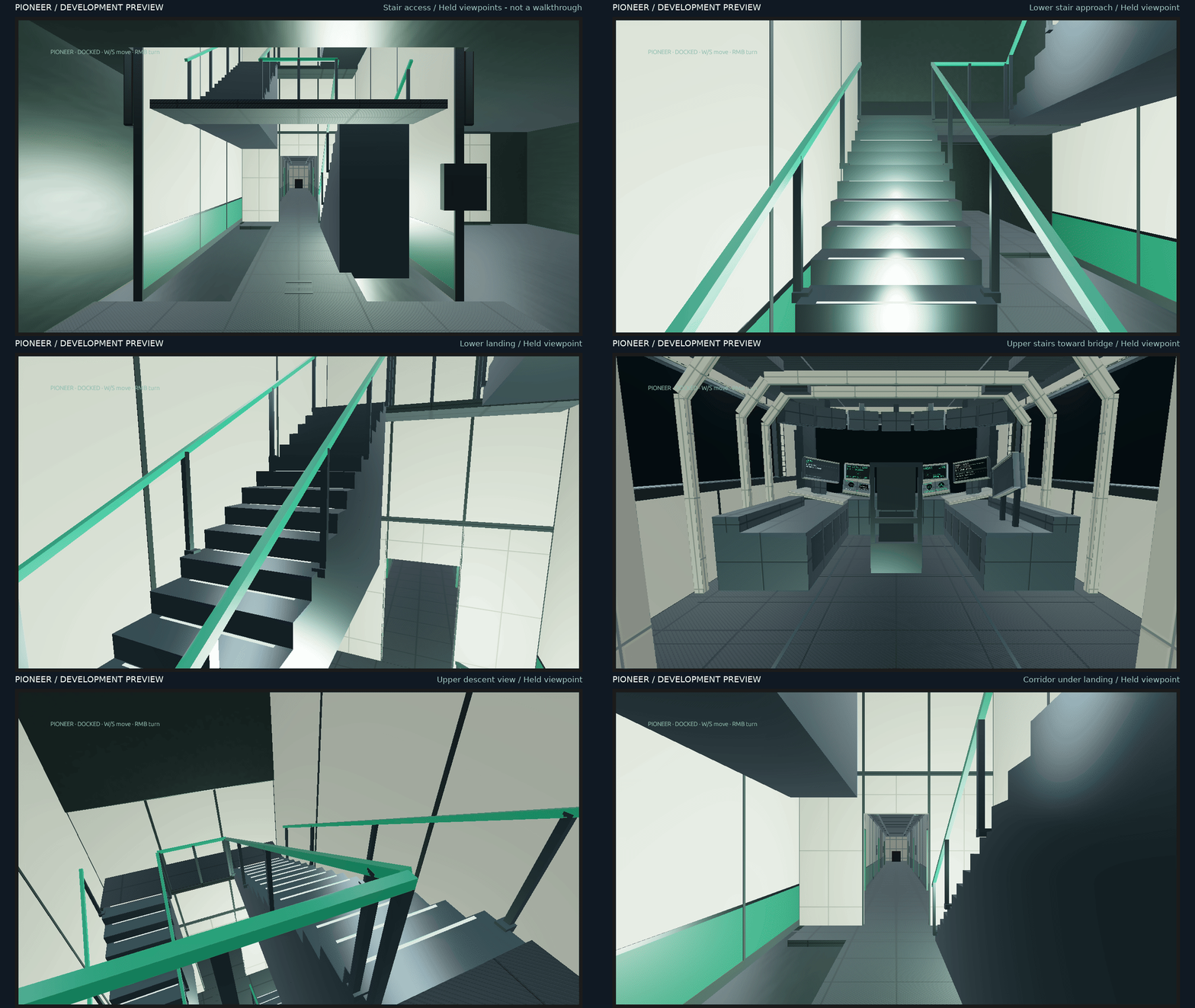
A raised room needs a convincing way to reach it. Three switchback flights now connect the lower access route to the bridge, with fifteen treads per flight, landings and guards. The stair route has 45 treads in total and a clear width of 1.2 metres. It does not introduce an instant teleport or a new powered lift.
The existing boarding lift, interlocked hatches and main-deck stairs remain part of the ship. Route tests cover the new treads in both directions, access to both decks, entering and leaving the seat, and restoring a saved intermediate landing. That checks the connection between spaces as well as the appearance of the staircase.
Making the hull agree
The exterior has to agree with the room inside. The old low bridge glazing is replaced by a lower service shell, the access tower is opened in the model, and the raised canopy has its own supporting structure. Forty closure probes confirm that the retired lower recess is covered by hull, while the intended boarding opening remains clear. Side glazing retains its frames and collision surfaces.
Raising the bridge also puts structure in front of the old forward gun paths. Both mounting sockets therefore move outboard together with the runtime turrets, muzzles and camera anchors. Their equipment identities are preserved. The distinction between a camera’s view and the bore’s path matters here: a clear image alone cannot prove that a gun clears the ship. Static forward-ray checks support this layout; a general firing-authority collision system remains separate work.
Keeping the working systems together
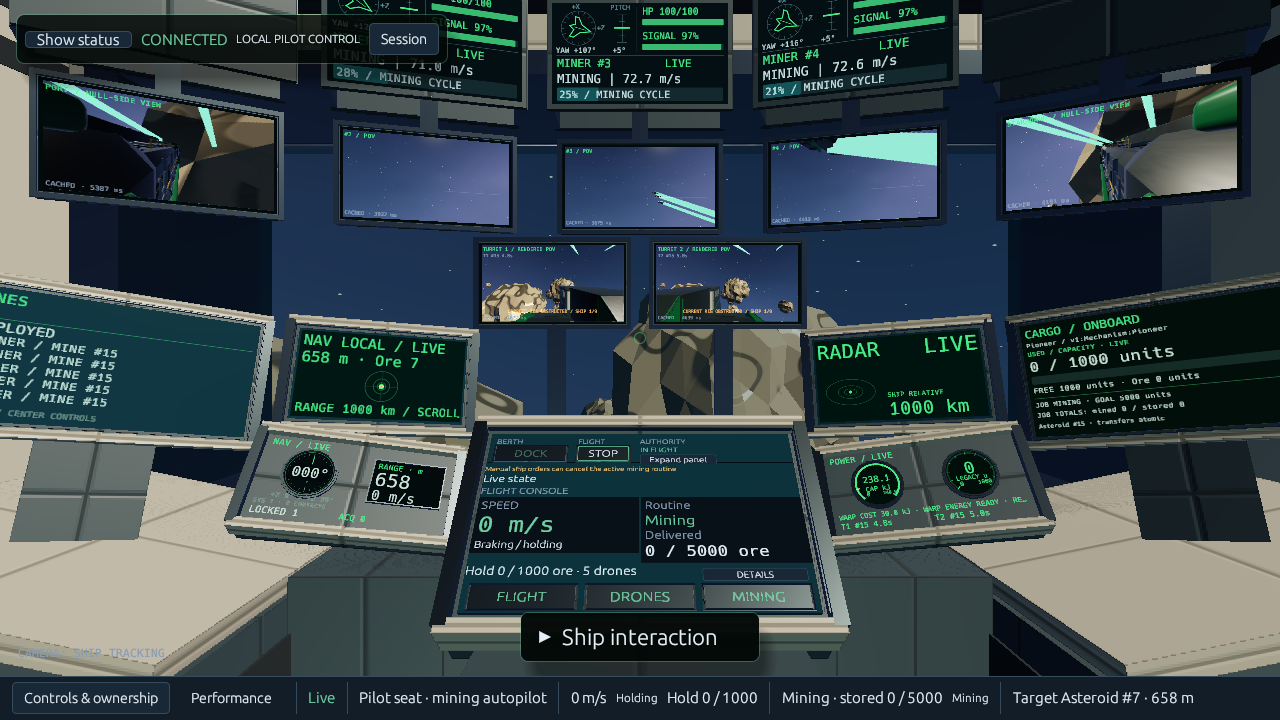
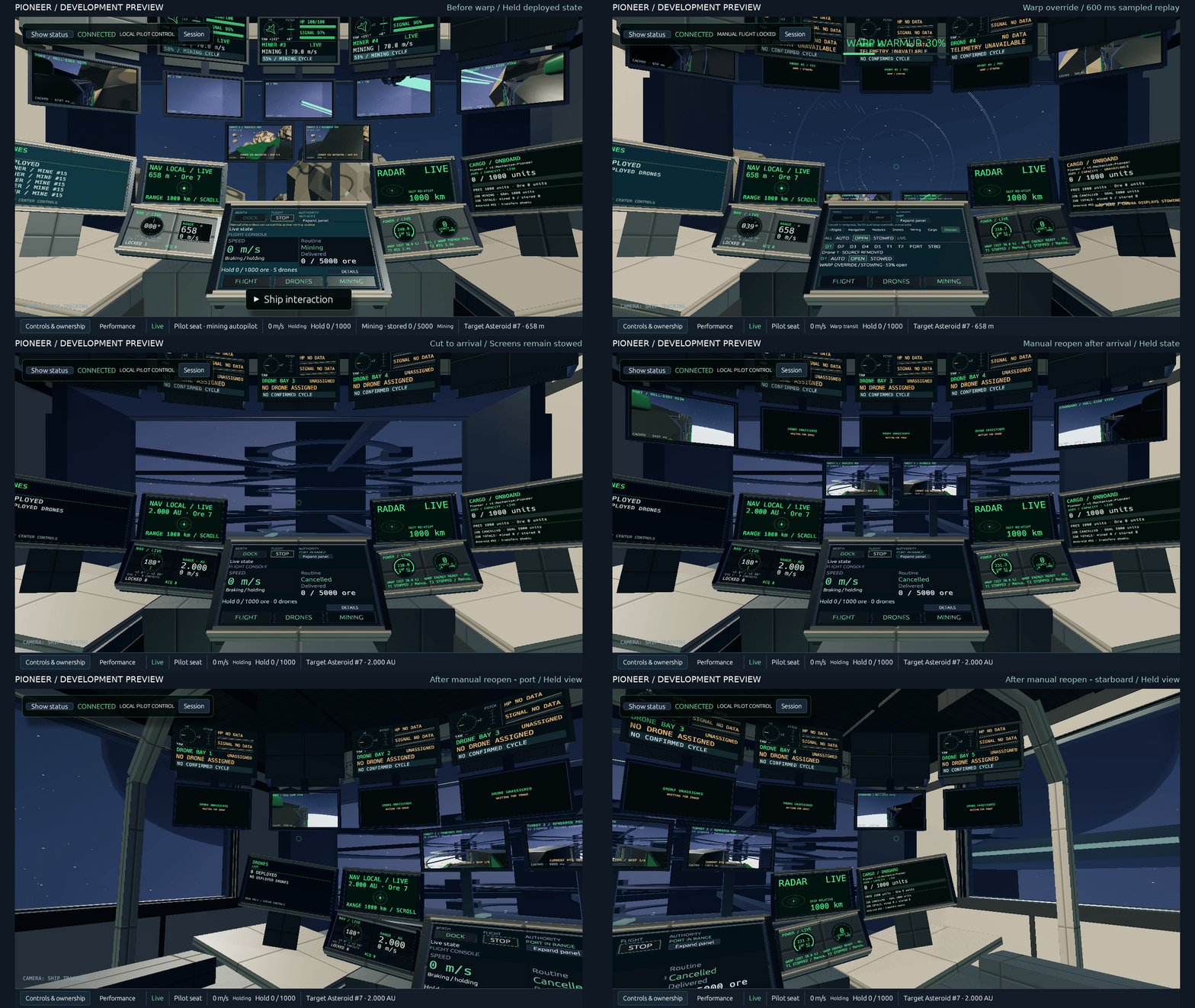
This pass retains the integrated nine-camera arrangement, five drone metric bands, cargo overview, mechanical reactor configuration and the captain’s AUTO, OPEN and STOWED display policies. Moving the bridge should not quietly discard the behavior already built into it.
Readability still has limits worth showing. A straight-ahead captain’s glance crops the tops of some overhead metric bands; looking up or turning the view exposes them. Freshness and obstruction labels remain visible, and a reconnect replaces the world view with the connection interface instead of presenting old readings as current. The raised cabin arrangement gives those systems a coherent home, but it does not make every instrument readable from one fixed gaze.
What this checkpoint establishes
The checkpoint recorded 79 protocol, 14 verifier and 263 server tests passing. The client recorded 535 passes and the same 11 known baseline failures, so the full client suite is not green. Eight native-rendered test suites produced 142 receipt-verified engine captures. Those include controlled rendering fixtures and replay of unchanged authoritative test responses, rather than a live player session or desktop frame-rate benchmark.
This is a functional industrial blockout. Registration 11 requires matching client and server geometry and fresh development worlds; earlier registered layouts are rejected rather than migrated. No existing user world was rewritten. Whole-ship mass, power, heat and fuel simulation, continuous docking, general weapon interlocks and mobile video streaming are not established by this refit.
The next checks before calling it a flagship
The useful next step is to close the remaining gaps without losing the working systems. This is the punchlist attached to this checkpoint, not a claim that later polish has already passed:
- Resolve the forward-view metric clipping and verify seat, look-around and control reach together.
- Refine the cabin and exterior blockout into a consistent visual language, while keeping the stairs, guards and collision routes usable.
- Investigate the 11 known client failures and keep the full protocol, server, verifier and client results visible.
- Run representative hardware checks for legibility, frame time and camera freshness; edited GIF timing cannot answer those questions.
- Exercise boarding, both decks, seating, mining, cargo, reactor controls, warp, reconnect and save/restore as one end-to-end journey.
- Treat wider simulation, docking, general weapon interlocks and migration of existing worlds as separate unfinished work, rather than filling those gaps with presentation.
Inside the checkpoint
Three flights to the raised bridge
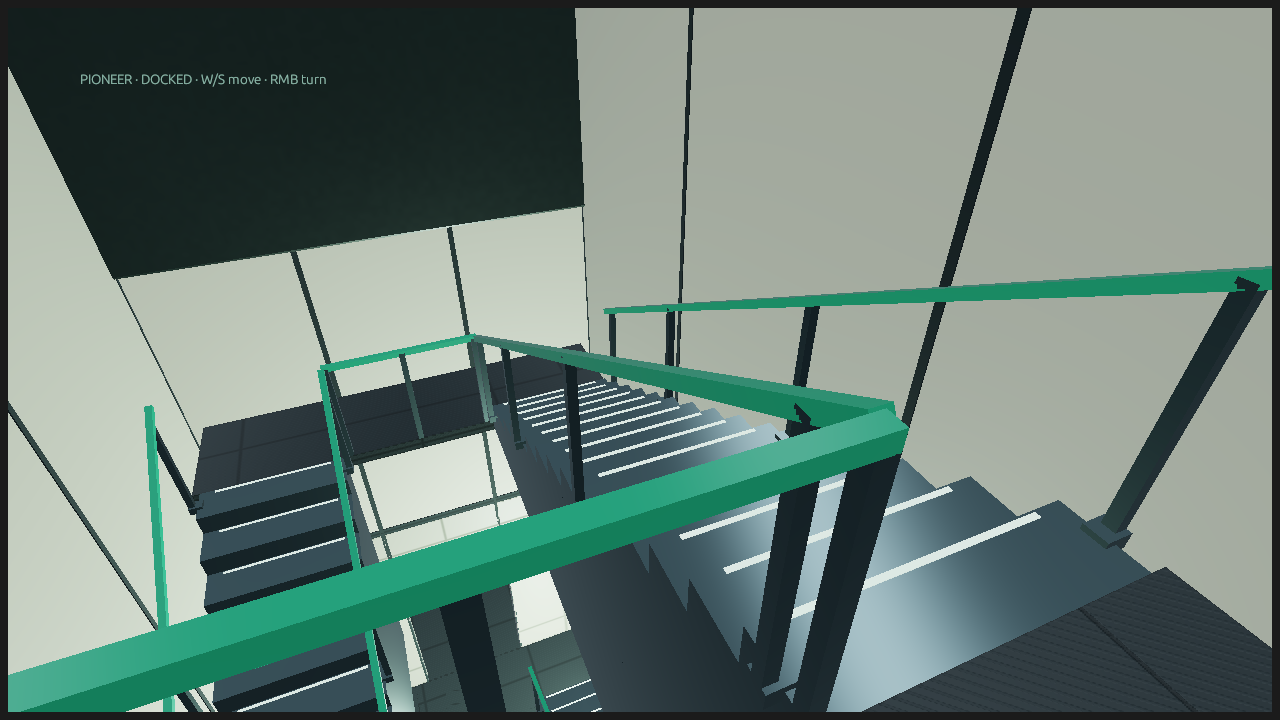
Play GIF Pause GIF · show still Capture details · motion paused Stair-route viewpoint study
Separate captured viewpoints show the access route; this is not continuous walking footage. Edited playback is not a frame-rate benchmark. Reduced-motion settings or “Pause animations” show a still. Open original GIF. Open still.
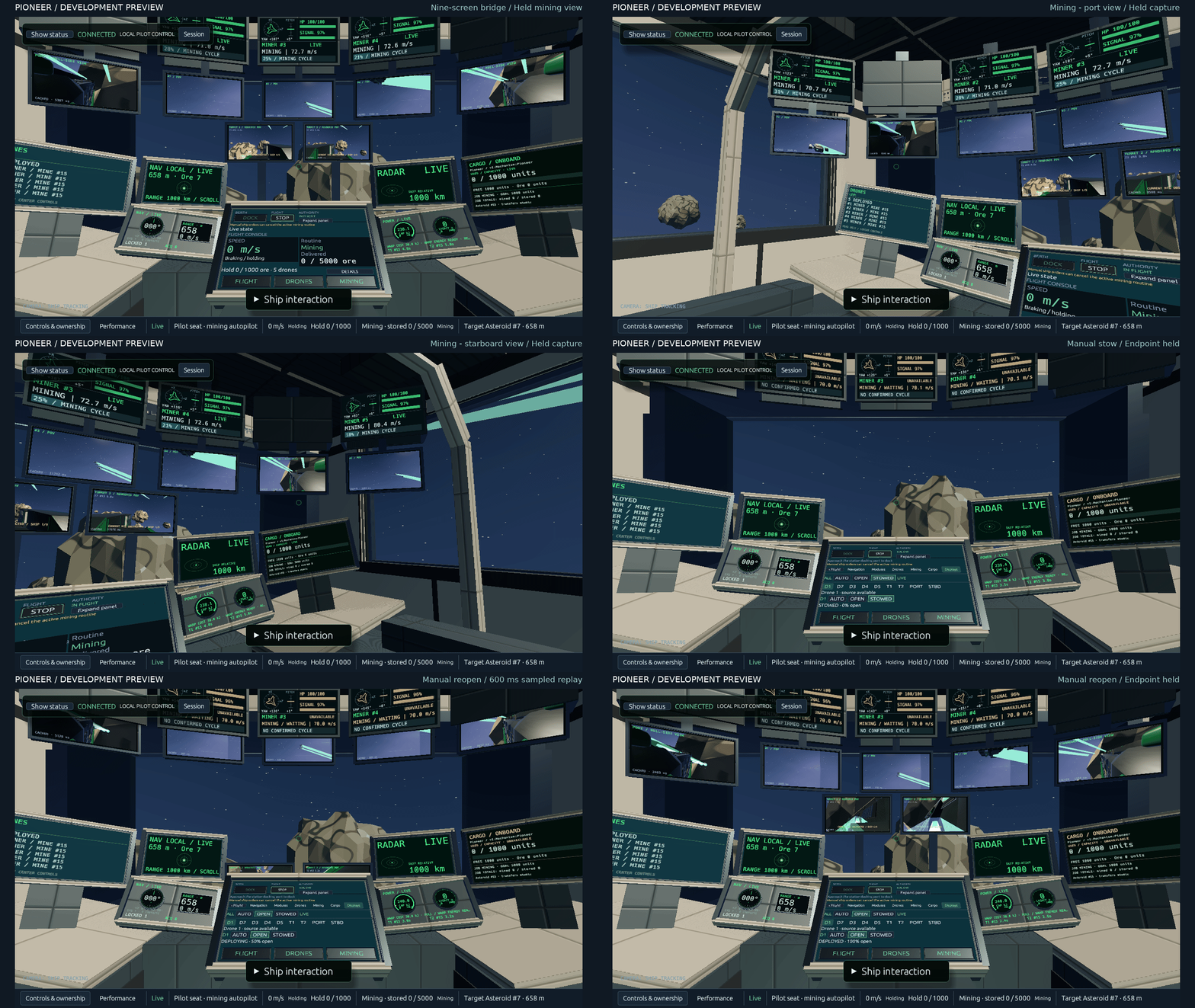
Nine cameras and manual stow
Play GIF Pause GIF · show still Capture details · motion paused Sampled display-state replay
Captured replay samples at 0, 600 and 1,200 ms show display states, not continuous real-time video. Edited playback is not a frame-rate benchmark. Reduced-motion settings or “Pause animations” show a still. Open original GIF. Open still.
Accepted warp and arrival states
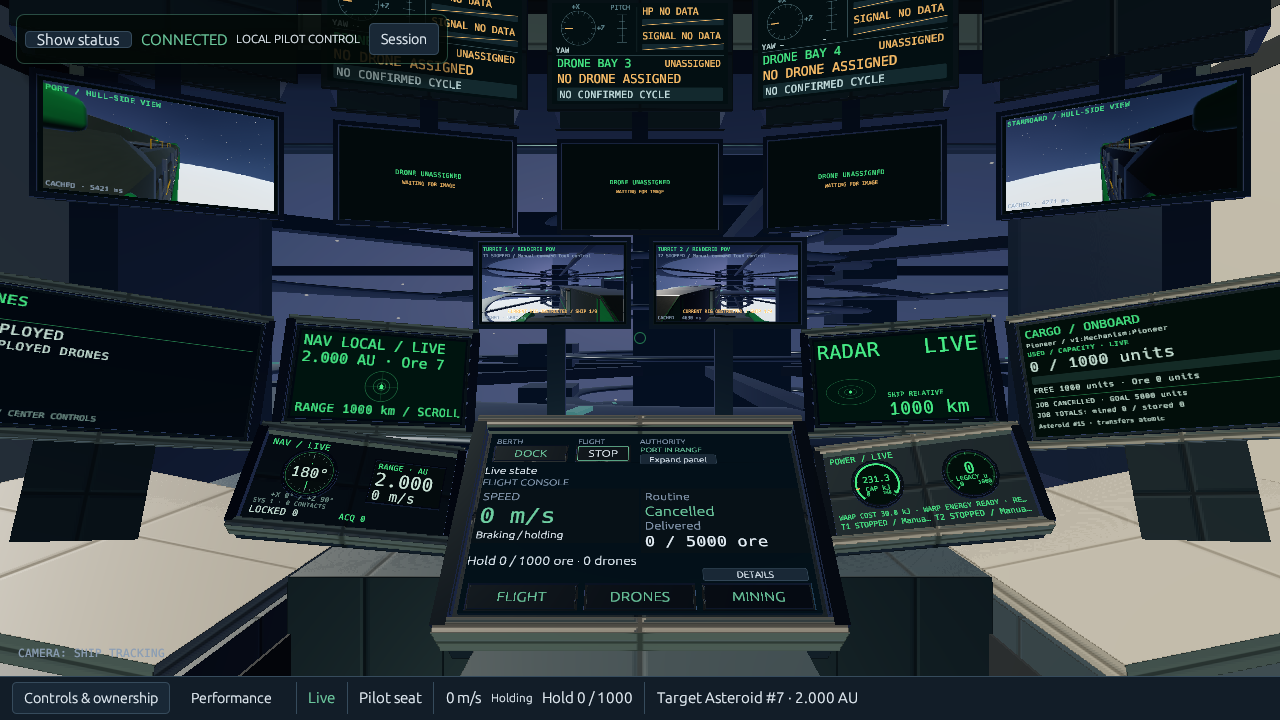
Play GIF Pause GIF · show still Capture details · motion paused Warp / arrival state study
Captured states distinguish accepted-warp stow, arrival with screens still stowed, and a later manual reopen. Edited playback is not a frame-rate benchmark. Reduced-motion settings or “Pause animations” show a still. Open original GIF. Open still.
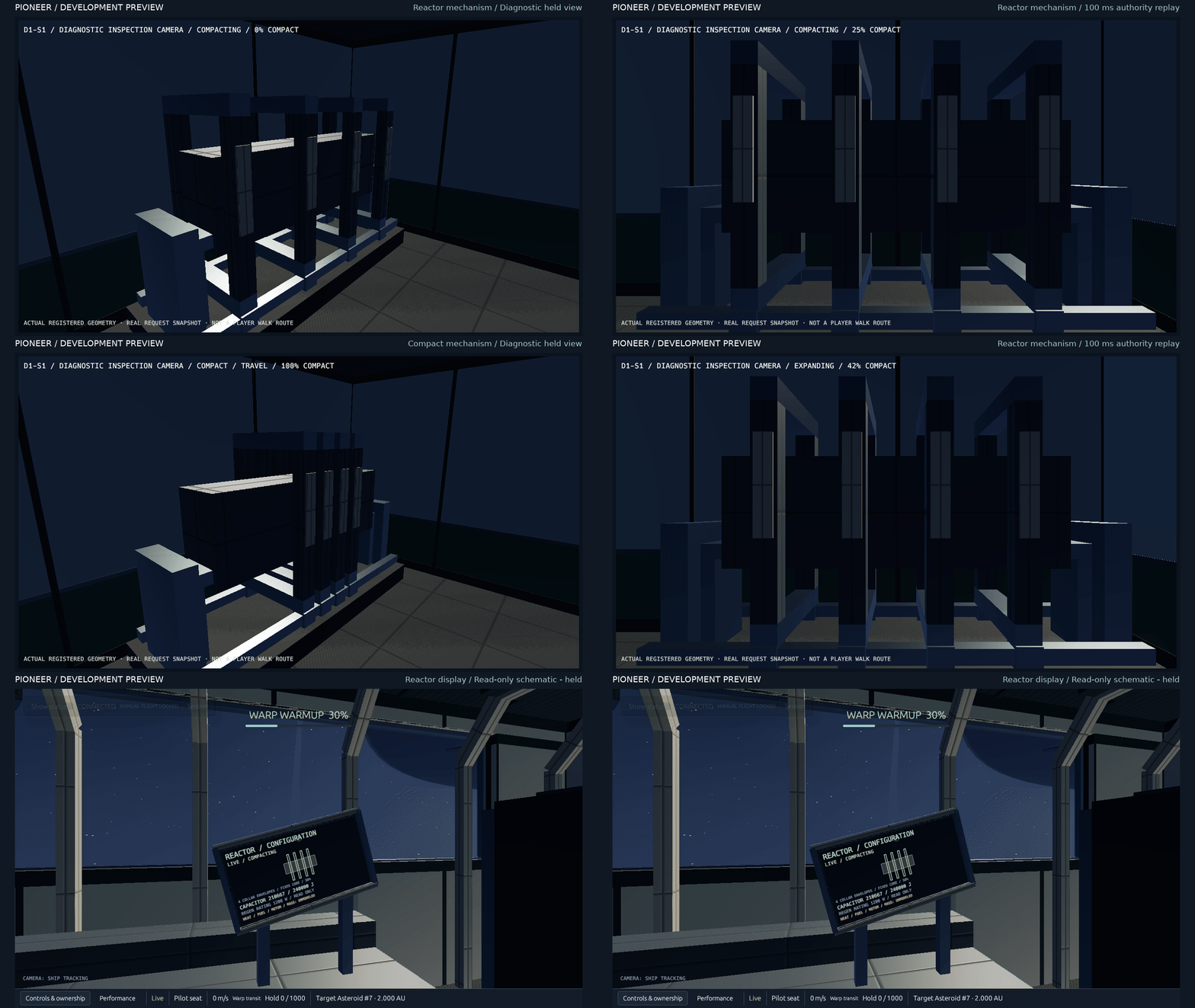
The retained reactor mechanism
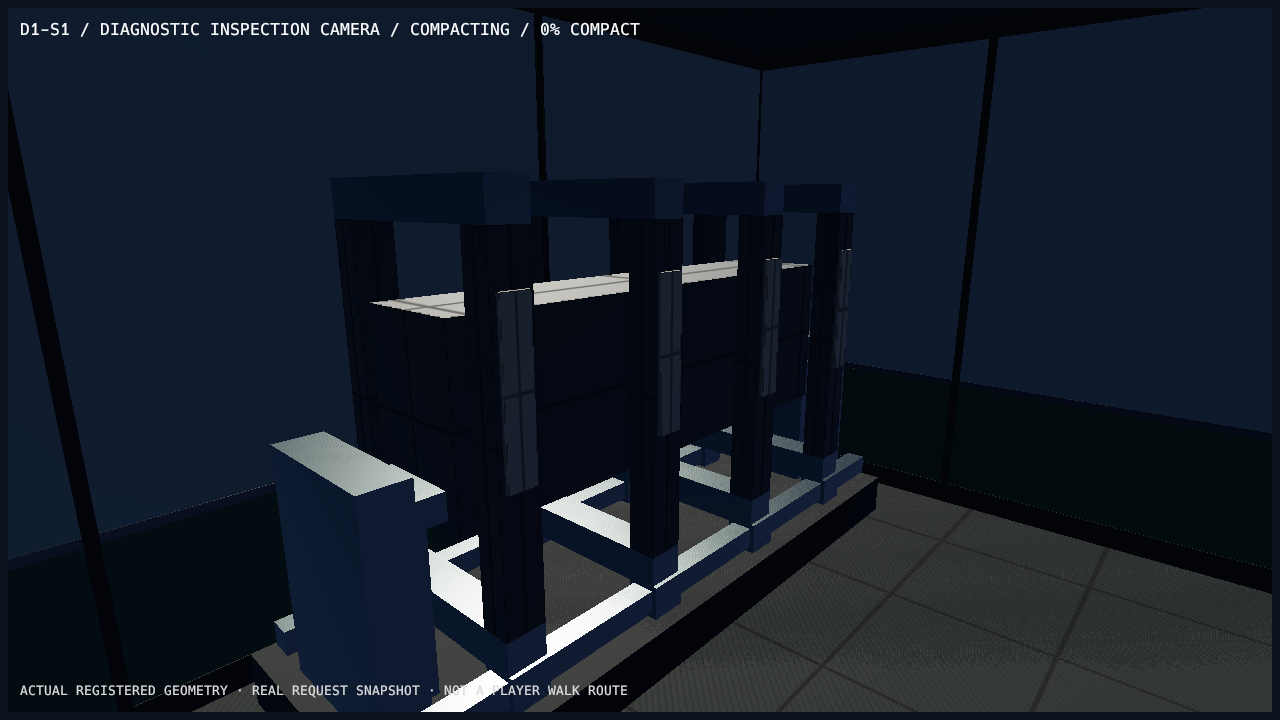
Play GIF Pause GIF · show still Capture details · motion paused Reactor capture replay
Actual mechanism samples at 100 ms intervals, followed by a held schematic view. The diagnostic camera is not a player walking route. Edited playback is not a frame-rate benchmark. Reduced-motion settings or “Pause animations” show a still. Open original GIF. Open still.